Access
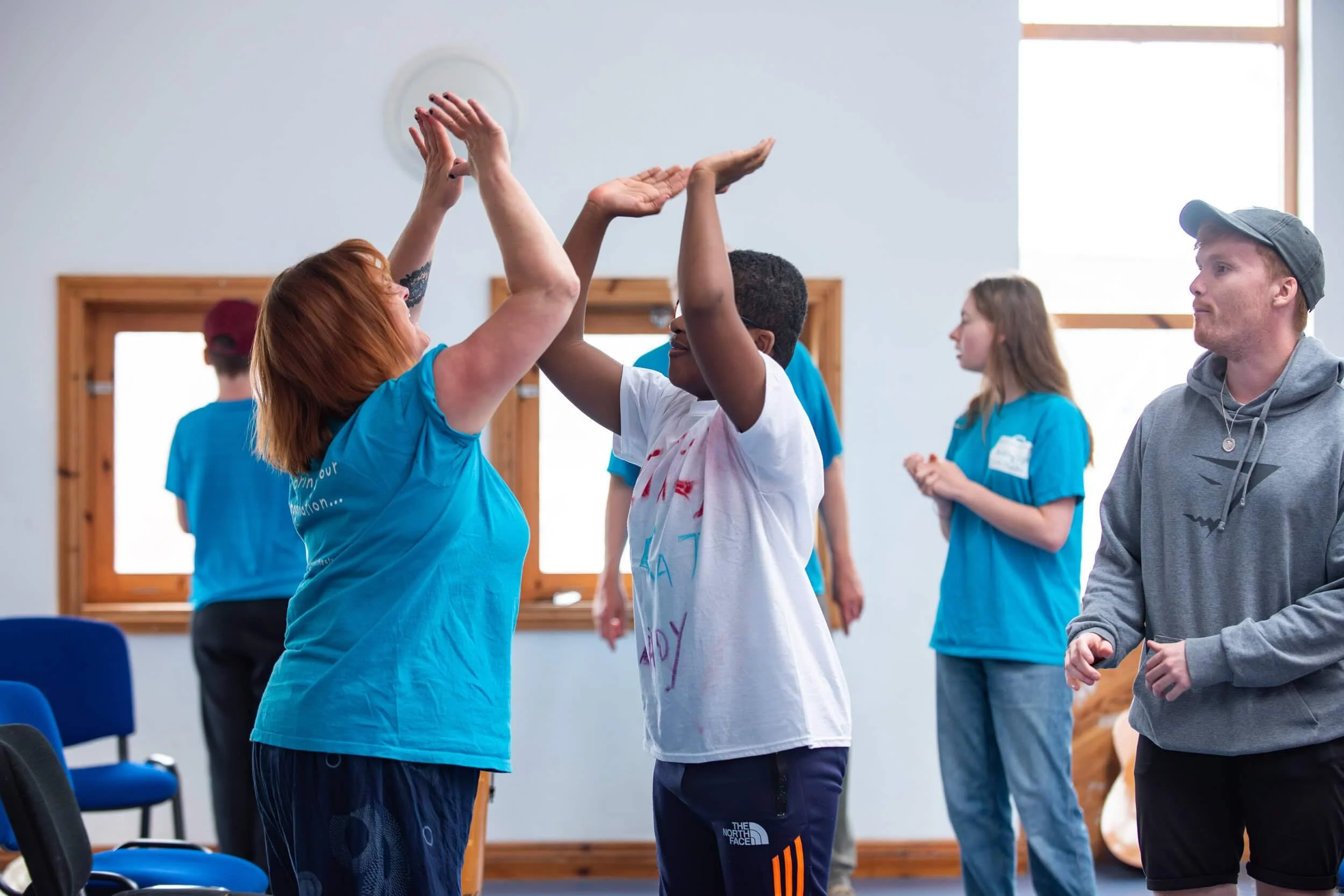
We want to ensure that children and families can access and enjoy our work, and to reduce and remove barriers wherever we can. We aim to provide an inclusive working environment for our staff, freelance artists and volunteers.
We are always learning, aiming to improve and striving for best practice. Please contact us if you would like to discuss your access requirements or have any feedback for us.
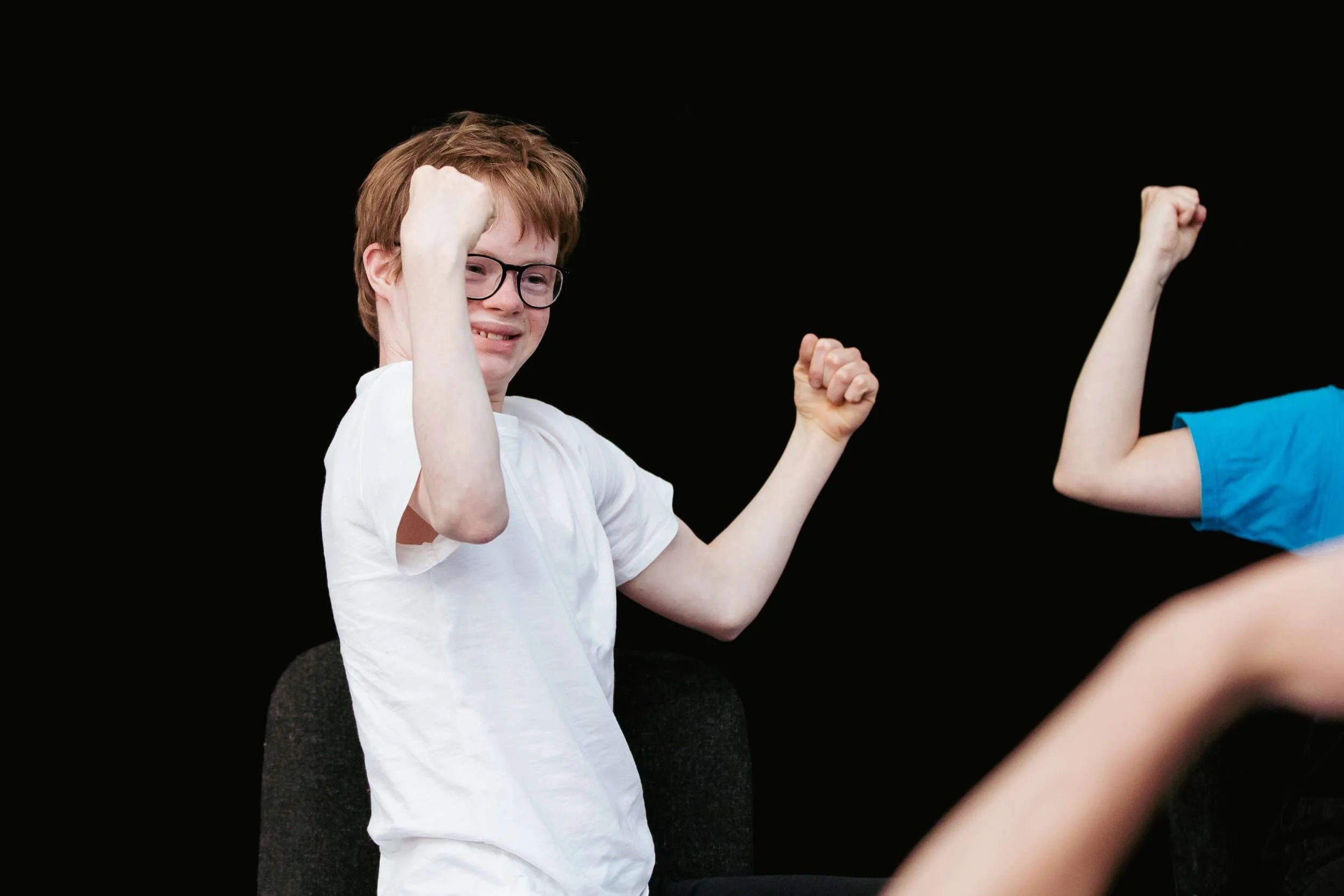
At Travelling Light, we use the social model of disability to frame the way in which we think and talk about Deaf, Disabled and neurodivergent people.
The Social Model of Disability was developed by Disabled people and describes people as being disabled by barriers in society, not by their impairment or difference. If modern life was set up in a way that was accessible for Disabled people, then they would not be excluded or restricted.
The social model of disability helps us recognise barriers that make life harder for Disabled people. These barriers are identified as being the physical environment, people’s attitudes, the way people communicate, how institutions and organisations are run, and how society discriminates against those who are perceived as ‘different’. Removing these barriers creates equality and offers Disabled people more independence, choice, and control.
Travelling Light and the
Social Model of
Disability
What we do
-
We offer:
Non verbal shows and storytelling for early years.
Relaxed performances.
Performances and events in community spaces.
Resources for children and families to share.
Free creative activities for children in our local area of Barton Hill.
Quiet spaces for reflection or prayer during activities.
Quiet spaces to feed your child.
We have baby changing facilities but currently our space and the Wellspring Settlement doesn't have any changing facilities for young people or adults.
-
We try to make sure all our Youth Theatre groups are inclusive and there are young people with additional needs in all our groups. Please speak to us about your child’s requirements and we can discuss the group that might be the best fit and how we can best support them to take part in our activities.
We use a variety of resources to engage young people in the sessions, such as sensory objects, fidget toys, fabrics and ear defenders.
We support different communication needs where possible including BSL support and Makaton.
We use a visual timetable and picture cards to help participants understand the format of the session and the room is set up in the same way each week.
We run Louder Than Words, a specialist Youth Theatre group for D/deaf and Disabled young people.
We offer free places or subsidised fees to attend our Youth Theatre.
-
We offer:
Non verbal shows and storytelling for early years.
We ensure that early years practitioners are involved in the planning stages of our creative learning projects to ensure they are inclusive for all children involved.
Our facilitators will come to you. We understand the logistical and cost barriers around travel for early years settings and will work around the timetables and spaces that you have available for us.
We aim to have longer and deeper partnerships with our settings so that the children get the most out of our sessions. We appreciate it can take time for young people to build trust with new adults.
-
We ensure that teachers are involved in the planning stages of our creative learning projects to ensure they are inclusive for all children involved.
We scaffold our activities to meet the needs of participants. We offer creative challenges but meet your students where they are on their learning journey.
Our facilitators will come to you. We understand the logistical and cost barriers around travel for schools and will work around the timetables and spaces that you have available for us.
-
We offer:
Tailored placements, workshops, sessions to support the individual needs of students. We try to make sure all sessions are inclusive, so please speak to us about your student requirements.
Projects and sessions designed in collaboration with partner settings.
Resources for students to take home and digest at their own pace - in accessible versions as required.
Relaxed performances.
Performances and events in community spaces.
Feedback and evaluation of all activity to ensure we review our practice.
-
Travelling Light is committed to providing the best possible environment for the artists we work with. We approach all artists with the question, what can we do to help you thrive whilst employed with us?
What we strive to do:
Ask questions. Hold safe space for conversations. Be clear on how much assistance we can reasonably provide and be honest about our flexibility within each project.
What we ask of our artists:
We encourage people to be honest about their needs, so they feel comfortable and are able to do their best work. Feel confident to ask questions – Do you need time to attend an important health appointment? Would you need to leave rehearsal early to do the school run? Do you need reading materials in advance or in a different format? We encourage open conversations around access requirements and will do our best to incorporate requirements.
For full details, visit Our Practice and read our Travelling Light Commitments to Artists document.
-
There is step free access to the Travelling Light studio and an accessible toilet, which may be suitable for some wheelchair users.
We have baby changing facilities but currently our space and the Wellspring Settlement doesn't have any changing facilities for young people or adults.
-
We aim to make our website accessible to a wide audience. This includes, using dyslexia friendly fonts, strong colour contrasts and Alt text on images.
Website users can use the installed ‘UserWay’ accessibility widget to alter colour contrasts, adjust text sizes, text spacing, highlight links, hide images and more.
Please contact us if you come across any accessibility issues that need to be addressed: info@travellinglighttheatre.org.uk
Resources
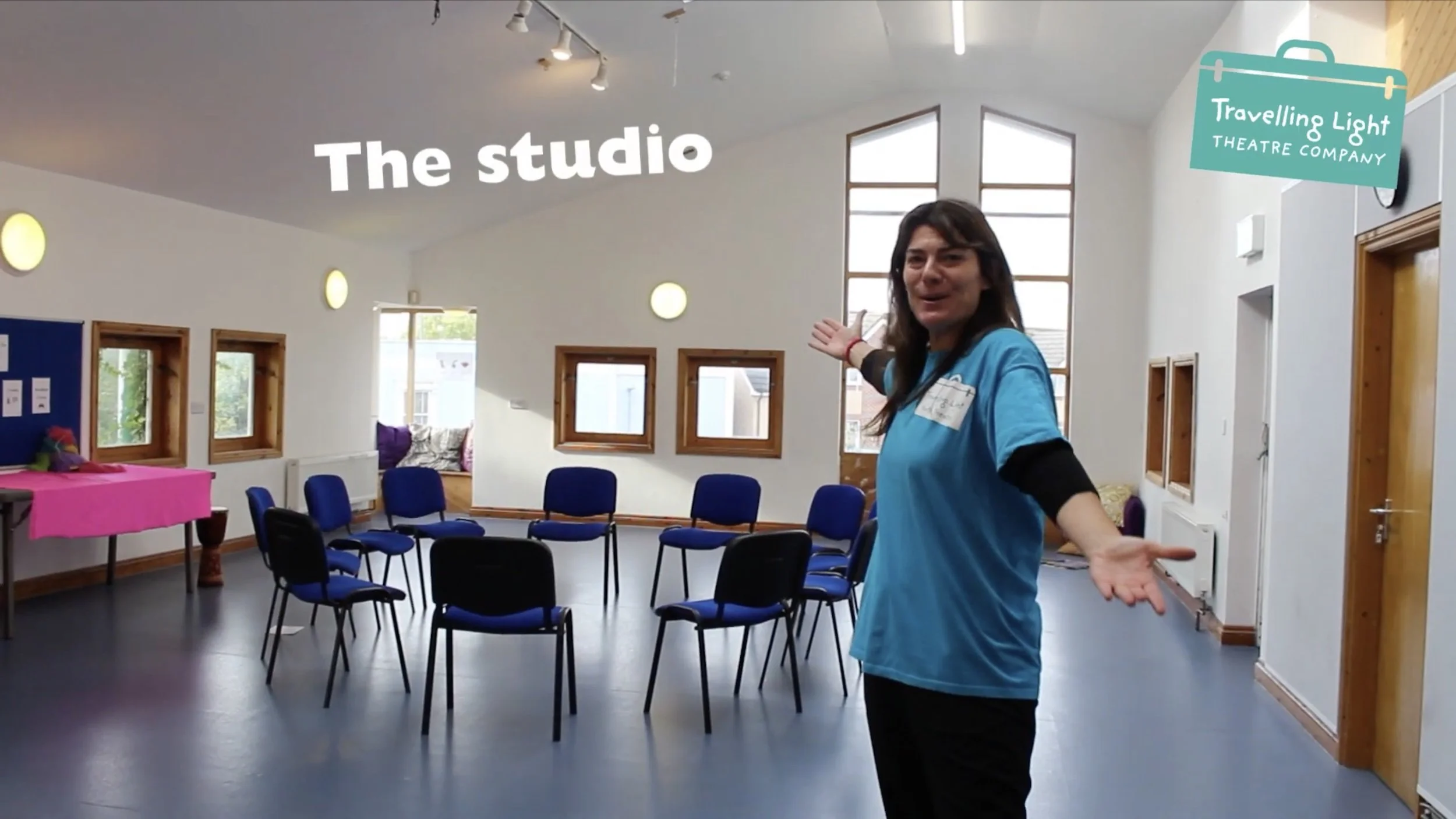
Watch the welcome & tour of the Travelling Light studio